Epoxy vs Polyaspartic: What Each Does and When to Use It
Two coatings, two jobs. Understanding the difference helps you choose a floor that suits your garage and your light.
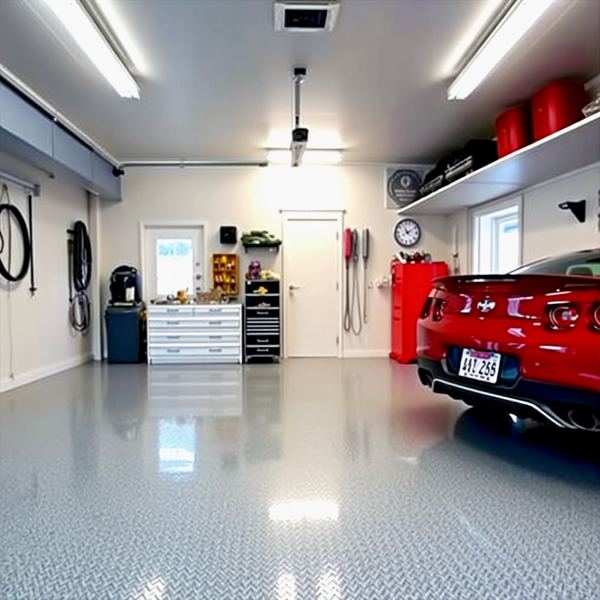
Homeowners often hear that they must pick epoxy or polyaspartic. In practice the two are frequently used together, because they do different jobs. Knowing those jobs makes it easier to plan a custom floor.
What epoxy does well
Epoxy is a two-part resin that cures into a hard, dense film. It bonds strongly to properly prepared concrete, and it builds thickness well. That makes it a solid base layer for a floor.
- Strong adhesion to a ground, clean slab
- Good build, which helps even out the surface
- A wide range of looks, from solid colours to metallic effects
The trade-off is sunlight. Standard epoxy can amber or yellow with long UV exposure, and it generally cures more slowly than polyaspartic.
What polyaspartic does well
Polyaspartic is a related coating chemistry, often used as a clear topcoat. It is UV stable, so it resists yellowing, and it cures faster. It also tends to give a hard, scratch-resistant surface.
- Resists yellowing in sunny spaces
- Faster cure, so the floor can return to use sooner
- Works well as a protective clear layer
Because it cures quickly, it is less forgiving to apply. Technique and timing matter.
Why many systems use both
A common approach is an epoxy base for adhesion and build, with a polyaspartic topcoat for UV stability and surface protection. Decorative flake or metallic colour sits between the layers, protected under the clear coat.
A garage with a big sun-facing door, or a patio that sees the sun all day, benefits most from a UV-stable topcoat. A shaded interior space may not need one.
What matters more than the product name
Whichever coating you choose, the result depends on the slab underneath. A floor that is properly ground, repaired and clean gives any coating a chance to bond. A poorly prepared slab can fail no matter how good the product is.
Questions to ask about your floor
- How much sun does the space get?
- Will vehicles, tools or heavy items be on it?
- What colour and finish do you want to see every day?
- What condition is the concrete in today?
The answers shape the system: base, decorative layer and topcoat. A custom build matches those choices to your space instead of using one recipe for every floor.
Care and daily use
Both coatings are easy to keep clean. Sweeping and mopping with a mild cleaner is usually enough, and spills should be wiped up rather than left to sit. Hard scraping and abrasive pads can dull any glossy surface, so soft tools are a better habit. Planning how the floor will be used helps you choose the right system from the start.
Talk it through
Every floor starts with the slab in front of us and how you plan to use the space. To discuss a custom floor, call 562-269-1709 or request a quote.